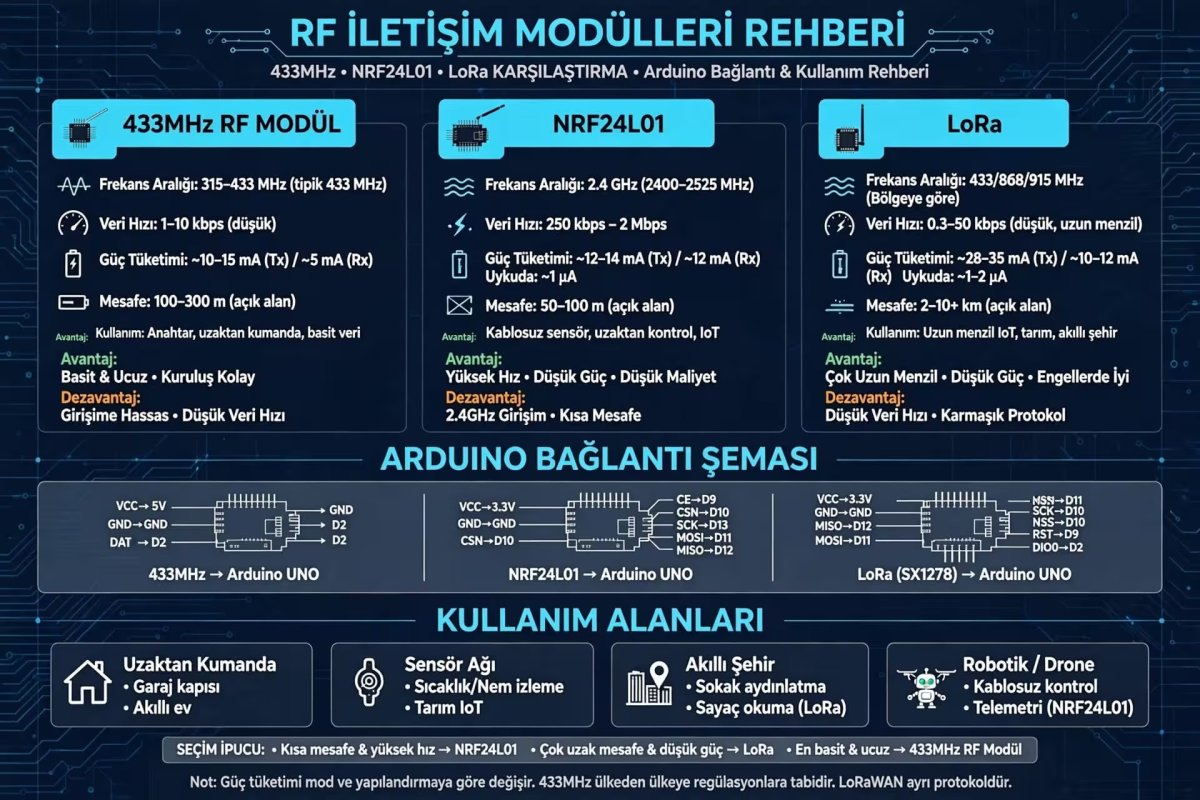
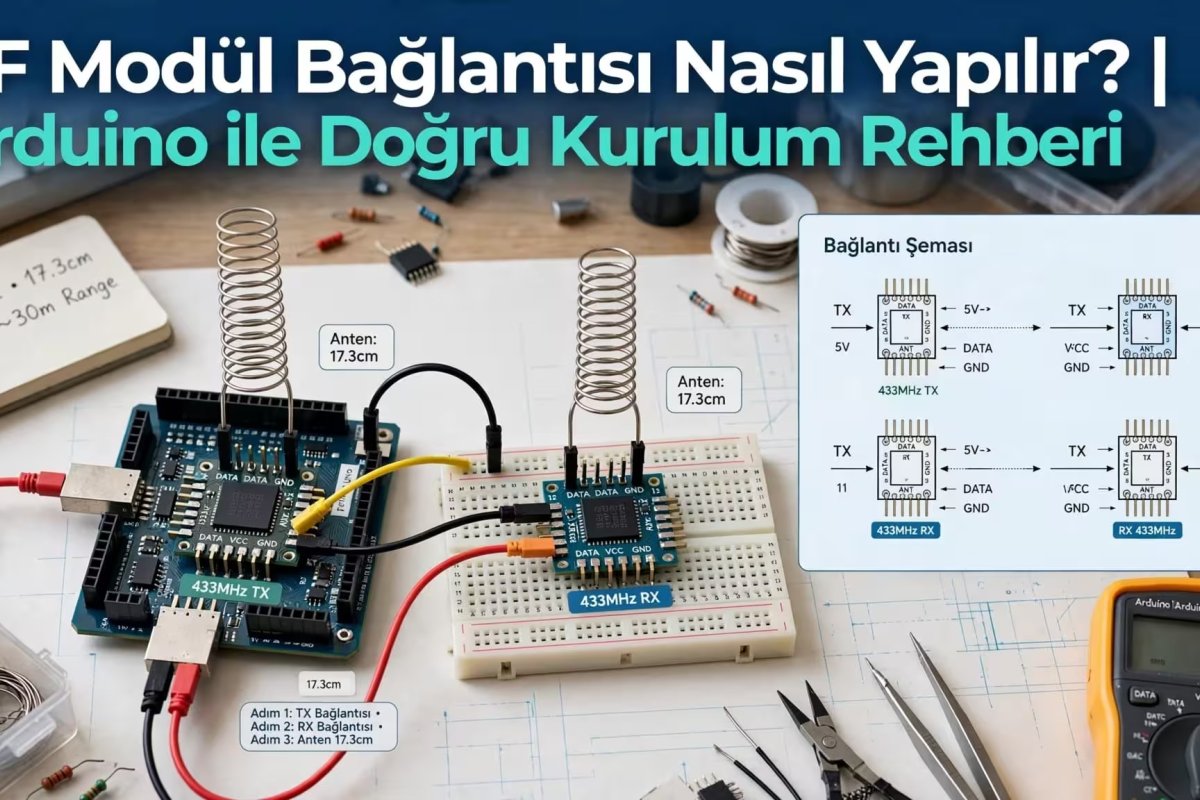
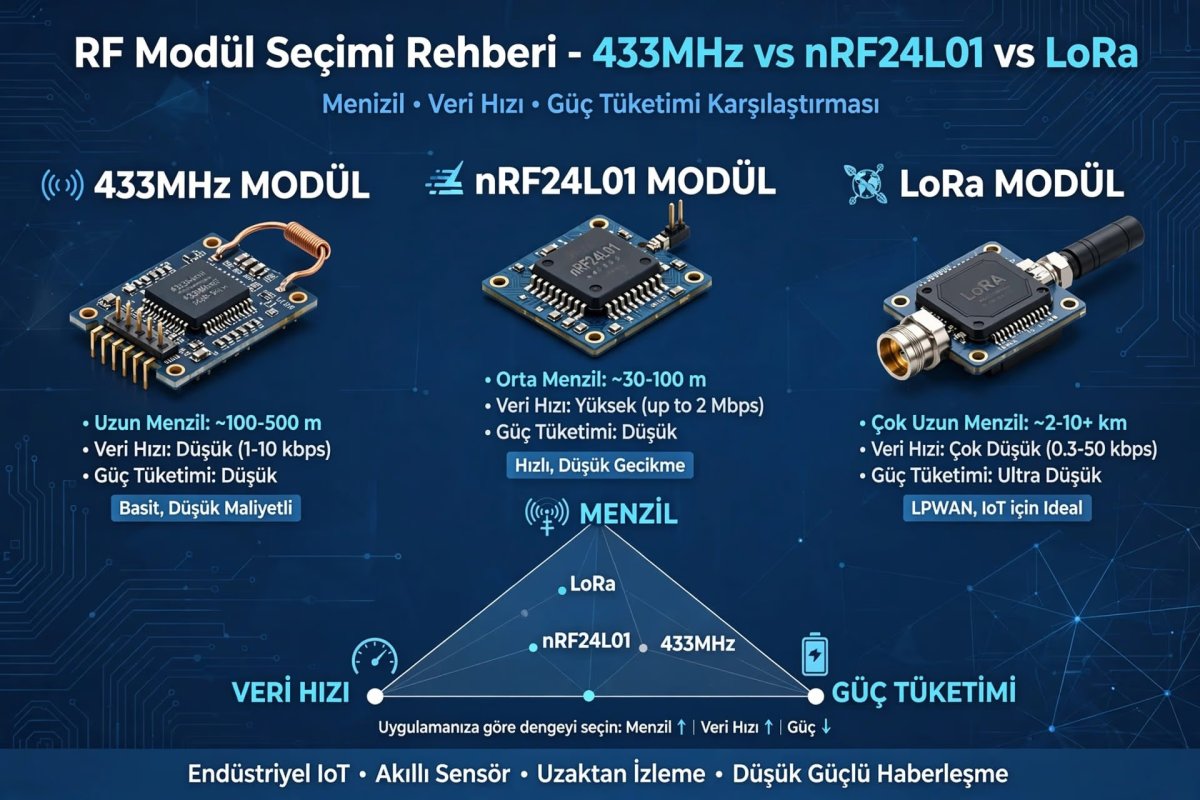
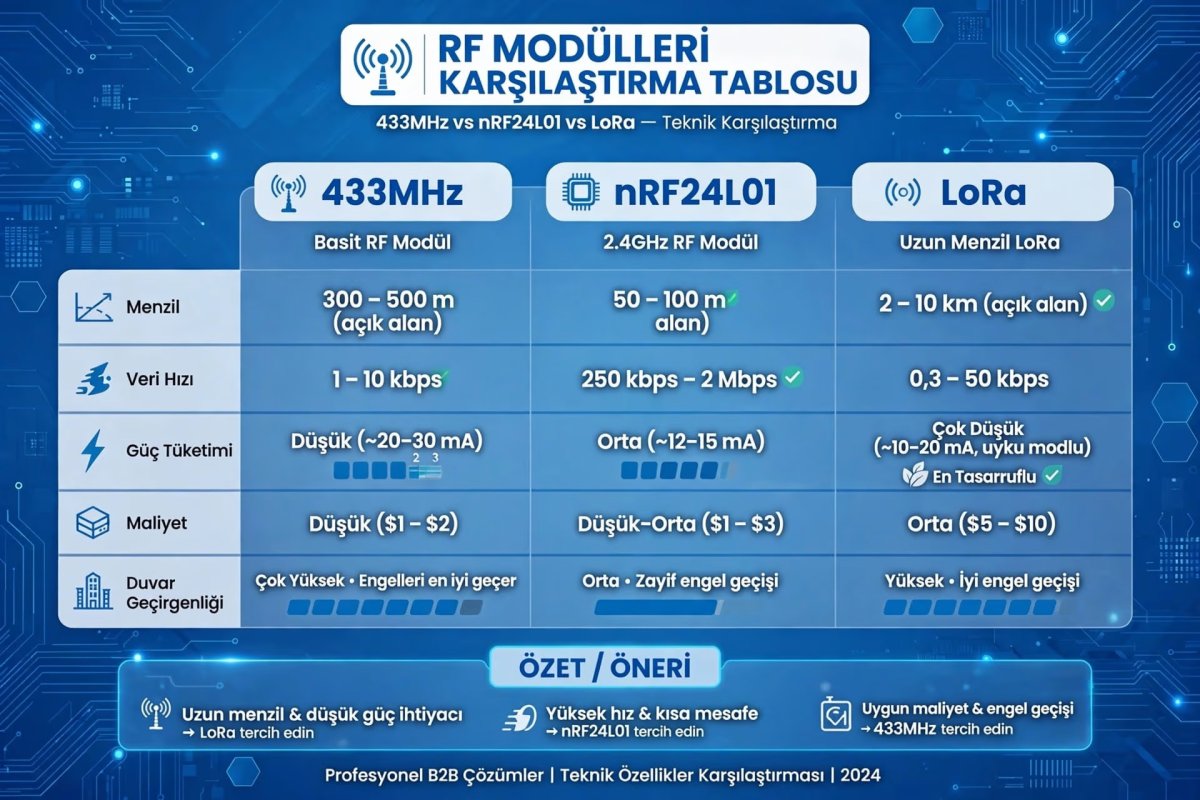
What Is an RF Connector? Types, Applications and Selection Guide
What Is an RF Connector? Types, Applications and Selection Guide
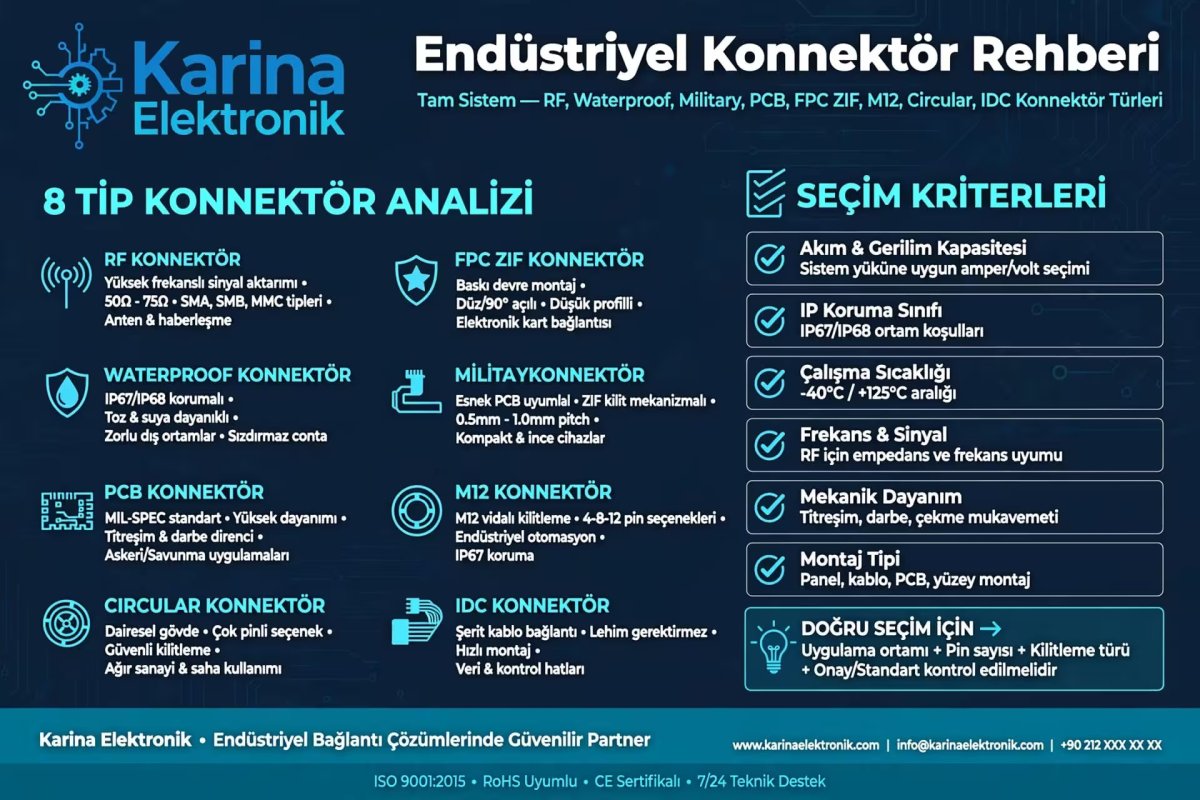
What Is an RF Connector?RF (Radio Frequency) connectors are special connection elements used for transmission of high-frequency signals.
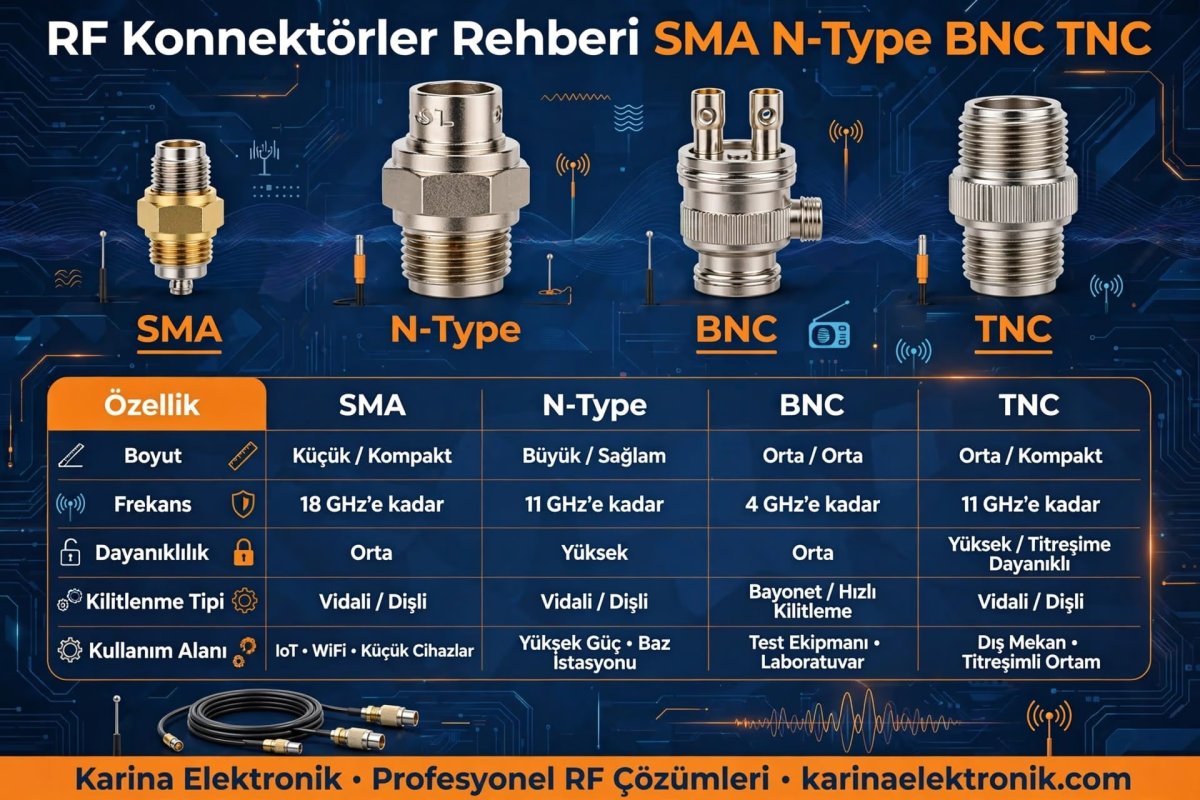
They provide stable and reliable data transfer by minimizing signal loss.They play a critical role especially in communication, telecommunications and measurement devices.Key Features of RF ConnectorsHigh-frequency signal transmission (DC-18GHz)Low signal loss (low insertion loss)Impedance matching (usually 50Ω / 75Ω)EMI/RFI protection support50Ω - Communication, antenna / 75Ω - Video, broadcastTypes of RF Connectors1. SMA Connectors
Small size, high frequency (DC-18GHz). Ideal for Wi-Fi, 5G, telecom, communication. Screw locking.2. BNC Connectors
Bayonet locked, quick plug-unplug. Common in test equipment, oscilloscope, video and CCTV systems.3. TNC Connectors
Has a screwed and more robust structure than BNC. Preferred in vibrating environments (vehicle systems, military, aerospace). DC-11GHz.4. N-Type Connectors
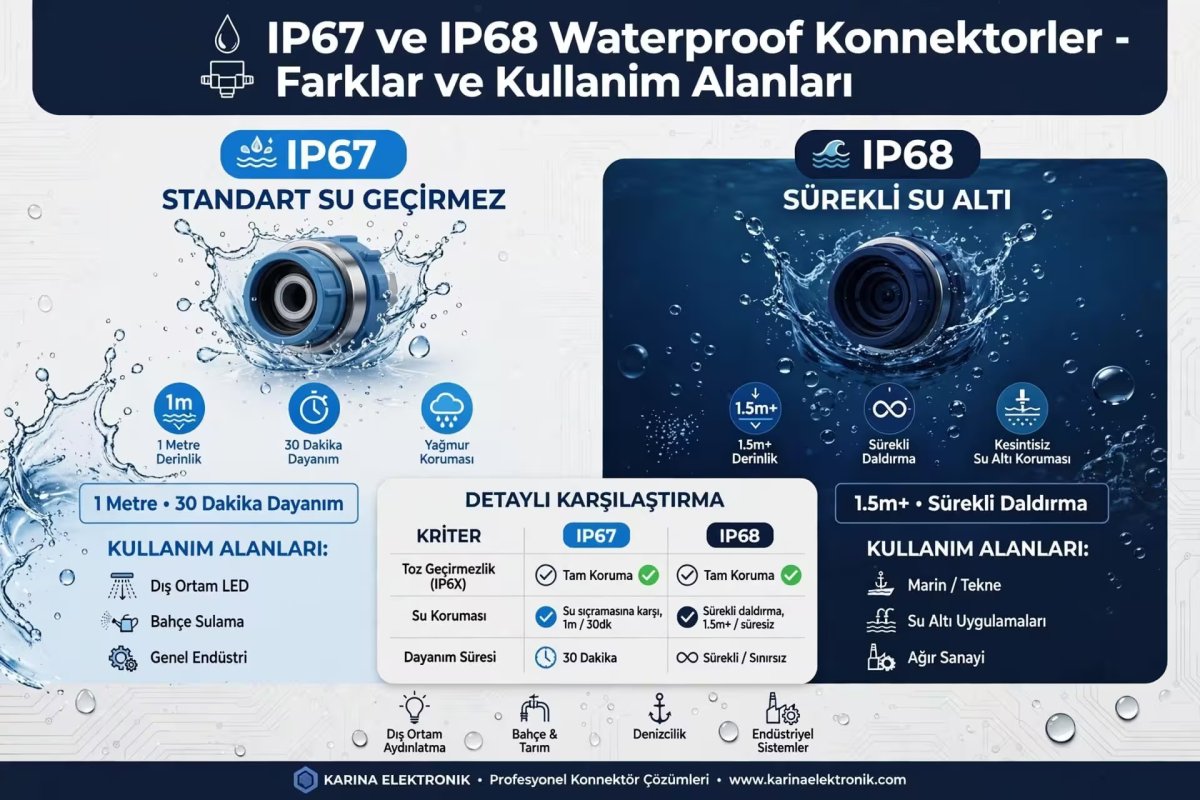
High power and outdoor applications. Large structure, waterproof. Suitable for base station, radar, antenna, satellite. DC-11GHz.Applications:
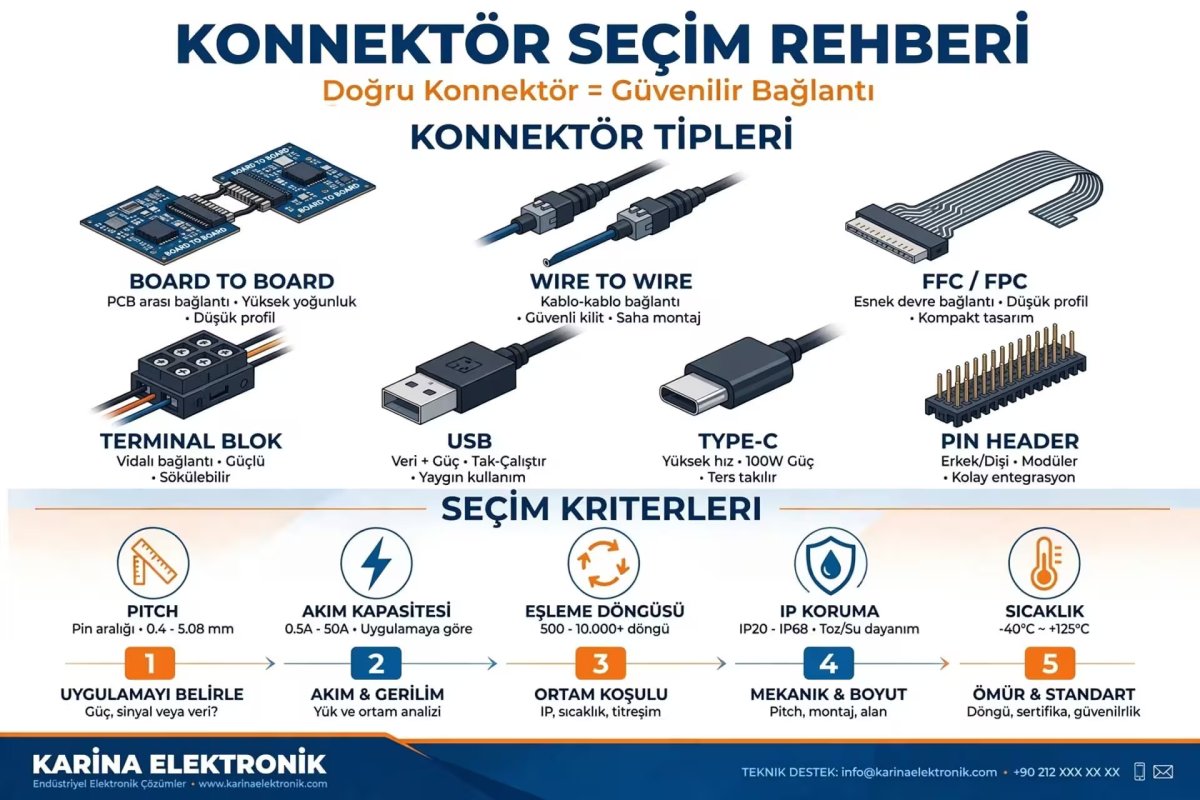
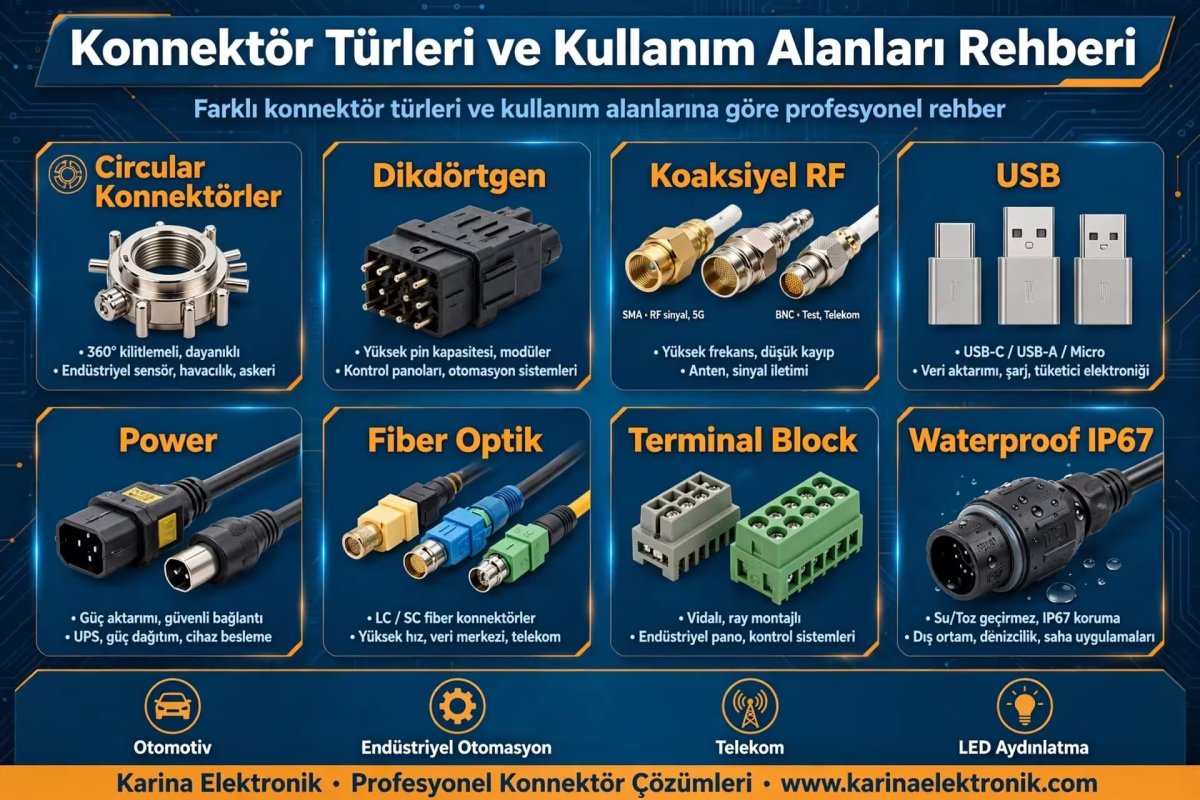
Telecommunication infrastructures and base stations, Antenna systems and satellite, Radar and defense systems, Test and measurement devices (oscilloscope, spectrum analyzer), Wireless communication (Wi-Fi, 5G).How to Choose an RF Connector?Working Frequency: If DC-4GHz, BNC is enough, if 18GHz, SMA is required.Impedance: 50Ω or 75Ω? Wrong matching causes 30% signal loss!Environmental Conditions: Is Outdoor IP67 required?Mechanical Durability: Vibration, temperatureConnection Type: Bayonet fast or screwed solid?Wrong selection causes signal loss and performance drop.Conclusion
RF connectors are critical components that preserve signal integrity in high-frequency systems. Correct product selection directly affects system performance.
For more products: https://www.karinaelektronik.com/